We remain constructive on the AI thematic. Sure, price action has been very strong and in short order so some profit taking would not surprise us, but we are sceptical about frequent recent discussion on a ‘bubble’ and a comparison to the dot.com crash. Unlike the situation in 2000, we believe most of the announced capital spending is well funded, is having a positive impact on the global economy, and should continue to drive global, and in particular Emerging, equity markets.
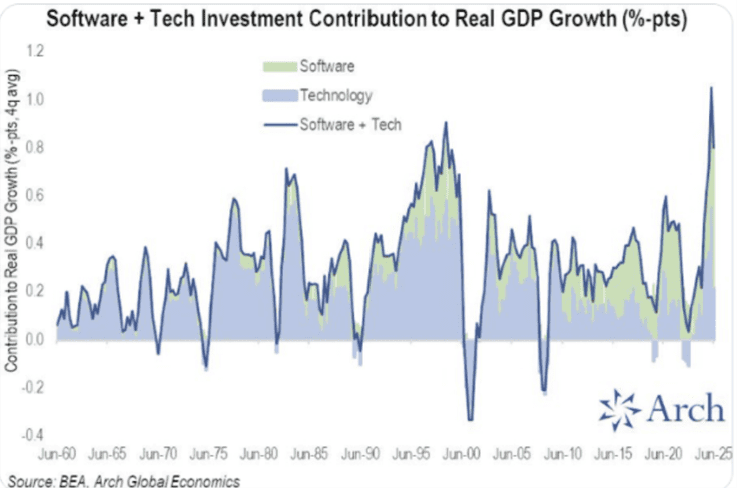
A significant proportion of the capital expenditure announced to date for data centres has been from global hyperscalers. These companies are some of the largest names in global equity markets and are high margin businesses with strong cash generation. The fact that this spending is from cash flow rather than from fresh equity or debt is positive and marks a contrast between the current cycle and the dot.com era. Furthermore, this spending is having a positive impact on global economic growth. The hyperscalers have historically been relatively capital-light, often spending a significant proportion of free cash flow on share buybacks. Now they are investing, building physical infrastructure, consuming resources and creating jobs. This change in capital allocation is having a positive impact across sector and across global markets.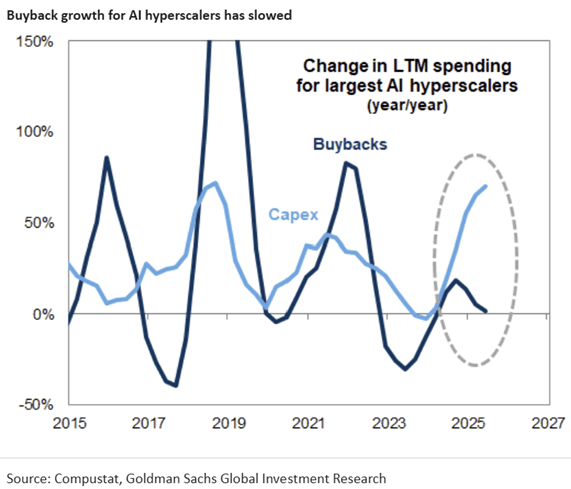
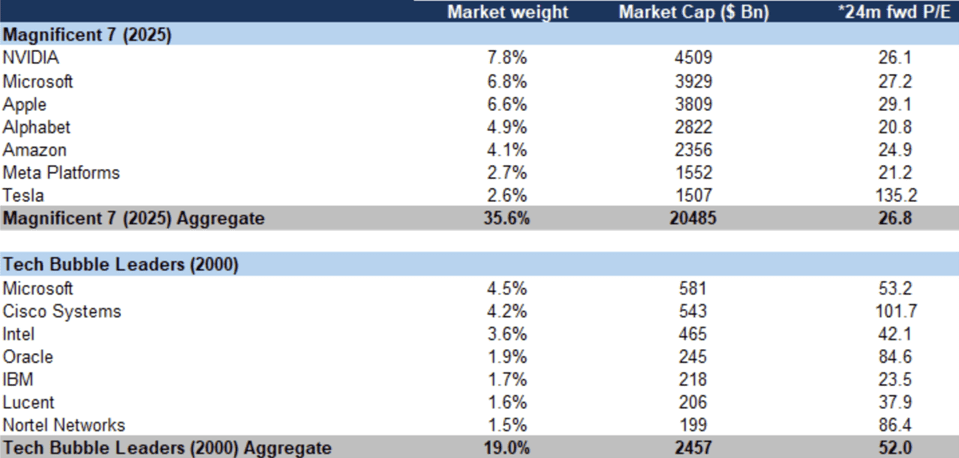
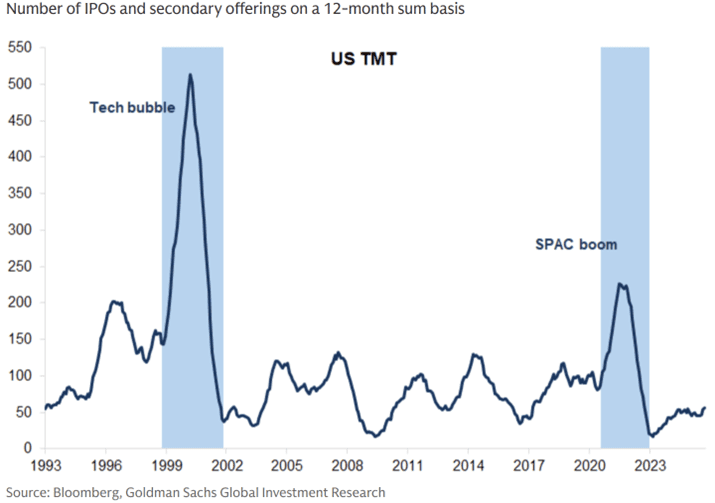
Another concern with the current cycle is that valuation levels are getting lofty. However, compared to the dot.com era, valuations of America’s largest companies don’t seem excessive (see table below). Furthermore, this cycle hasn’t seen a spate of IPOs in early-stage businesses with little or no revenue but with large valuations.
There are undoubtedly some small parts of global equity markets that are a bit frothy. One example would be companies that are trying to solve the issue of how to power these new datacentres, such as Oklo (small module nuclear reactors), which, as the FT recently highlighted, currently has “no revenues, no license to operate reactors and no binding contracts to power supply” but has a market capitalisation of ~$18bn.
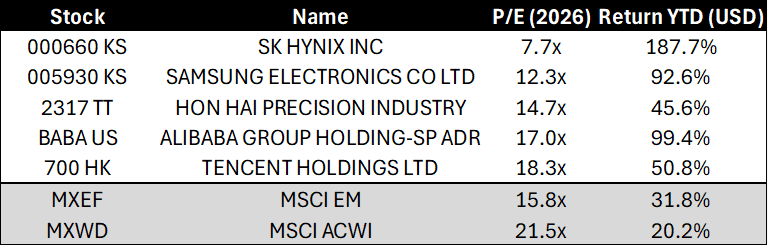
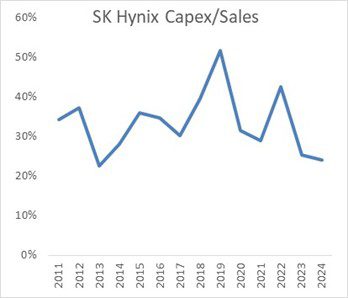
By contrast to Oklo, there are a lot of beneficiaries of the hyperscaler capex that are on very attractive valuation multiples, and many of these are to be found in Emerging Markets. One particular name to highlight in the table below is SK Hynix. The fact the stock is trading on less than next year’s earnings estimates suggests the market is not pricing in sustained earnings growth from hyperscaler capex. Furthermore, we like the fact that the company is being much more disciplined this cycle with regards to capex, which should help maximise returns in this upcycle and limit the lows in any future downcycle.
Look out for our next article, where we will delve deeper into some of the emerging market beneficiaries of AI.
Read our latest insight: “Talk of an AI bubble? That’s just a lot of hot air…” – click here to view the full PDF
